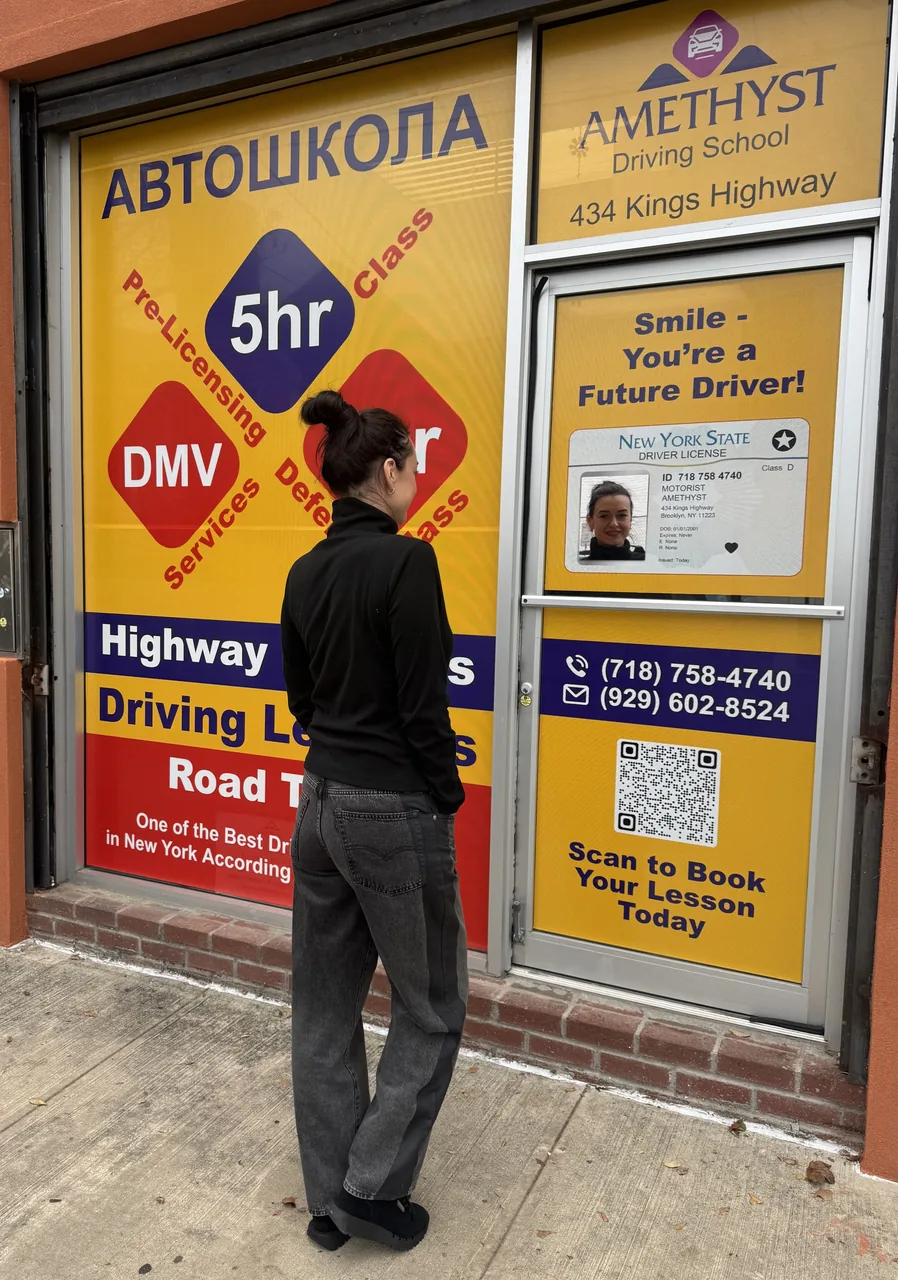
We pride our business on its professionalism, punctuality, affordability, and up to date teaching techniques and learning strategies. Our mission is to provide our students with a higher standard of driving techniques to help them become safe, confident drivers.
We are looking forward in sharing our best with you!
The right timing won’t replace skill — but it can reduce stress and lower the chance of small DMV mistakes.
Here’s an instructor-style breakdown of the best time of day, best weekdays, weather considerations,
and how to use timing as a real advantage on test day.
✅ Best “sweet hour”: 10:00–11:00 AM
✅ Safe window: 9:30–11:30 AM
✅ Best days: Tue–Thu
✅ Goal: calm roads + calm mind
Introduction
Most students prepare for a road test by practicing maneuvers: parallel parking, three-point turns, lane changes, and smooth stops.
But timing matters more than people expect. In NYC, traffic patterns change by the hour — and that changes your stress level,
the number of surprises on the road, and how easy it is to demonstrate safe, consistent driving.
The goal is simple: choose a test time when the roads are more predictable and your mind is fully “awake,” so you can focus on observation,
signals, and safe decision-making instead of fighting congestion.
1) Best time of day
Best choice: a mid-morning slot — ideally 10:00–11:00 AM, with a broader safe window of 9:30–11:30 AM.
Why mid-morning works in NYC: the morning rush typically cools down after 9:30 AM. That means fewer aggressive lane changes,
fewer last-second stops, less “pressure traffic” behind you, and more space to show clean technique.
What makes 10:00–11:00 especially strong:
Your brain and reaction time are fully “on” (most people drive better than at 8:00 AM)
Examiners tend to be fresher earlier in the day
Visibility is often more stable (less glare/low-light issues, especially in winter)
It’s before many school and mid-day delivery spikes
Times to avoid (if you have choices):
7:00–9:30 AM — rush hour, more unpredictable drivers
2:30–4:00 PM — school-zone activity and increased pedestrian flow
4:00–6:30 PM — evening congestion and heavier pressure on the road
2) Best day of the week
In NYC, the most reliable days tend to be Tuesday, Wednesday, and Thursday. Traffic is usually more predictable than Mondays,
and you avoid the “Friday effect” when roads get busier and more rushed.
Thursday — still manageable before Friday congestion
3) Weather and season (don’t ignore this)
Bad weather doesn’t automatically mean you’ll fail — but it increases stress and the number of variables you must manage.
Even strong drivers can become hesitant in heavy rain, snow, or icy conditions.
Best conditions:
Dry pavement
Clear visibility
Mild temperatures
If you have flexibility, avoid days with heavy rain, snow/ice, or strong wind. Choose a calm weather day so you can focus on technique:
full stops, mirror checks, smooth turns, and clean lane position.
4) The mental advantage (this is real)
Timing isn’t only about traffic — it’s about your mind. Mid-morning tests give you time to wake up properly, eat,
and arrive early. When people schedule a test too early or squeeze it between work and errands,
anxiety goes up and small mistakes happen: rolling stops, late signals, rushed decisions.
Pro tip: arrive 20 minutes early. If possible, do a short warm-up drive right before the test.
The goal is to show safe, consistent driving — not to “survive” traffic.
Final recommendation
If you can choose a time, schedule your road test for 10:00–11:00 AM (or the safe window 9:30–11:30 AM)
on a Tuesday, Wednesday, or Thursday during mild, dry weather.
Smart timing won’t replace skill — but it reduces stress and gives you the best environment to perform well.
Need Professional Road Test Preparation?
Contact Amethyst Driving School for focused test preparation, real exam route practice,
and last-minute warm-up sessions before your road test.
Used to monitor number of Google Analytics server requests
10 minutes
__utmb
Used to distinguish new sessions and visits. This cookie is set when the GA.js javascript library is loaded and there is no existing __utmb cookie. The cookie is updated every time data is sent to the Google Analytics server.
30 minutes after last activity
__utmc
Used only with old Urchin versions of Google Analytics and not with GA.js. Was used to distinguish between new sessions and visits at the end of a session.
End of session (browser)
__utmz
Contains information about the traffic source or campaign that directed user to the website. The cookie is set when the GA.js javascript is loaded and updated when data is sent to the Google Anaytics server
6 months after last activity
__utmv
Contains custom information set by the web developer via the _setCustomVar method in Google Analytics. This cookie is updated every time new data is sent to the Google Analytics server.
2 years after last activity
__utmx
Used to determine whether a user is included in an A / B or Multivariate test.
18 months
_ga
ID used to identify users
2 years
_gali
Used by Google Analytics to determine which links on a page are being clicked
30 seconds
_ga_
ID used to identify users
2 years
_gid
ID used to identify users for 24 hours after last activity
24 hours
_gat
Used to monitor number of Google Analytics server requests when using Google Tag Manager
1 minute
_gac_
Contains information related to marketing campaigns of the user. These are shared with Google AdWords / Google Ads when the Google Ads and Google Analytics accounts are linked together.
90 days
Marketing cookies are used to follow visitors to websites. The intention is to show ads that are relevant and engaging to the individual user.
Google Maps is a web mapping service providing satellite imagery, real-time navigation, and location-based information.