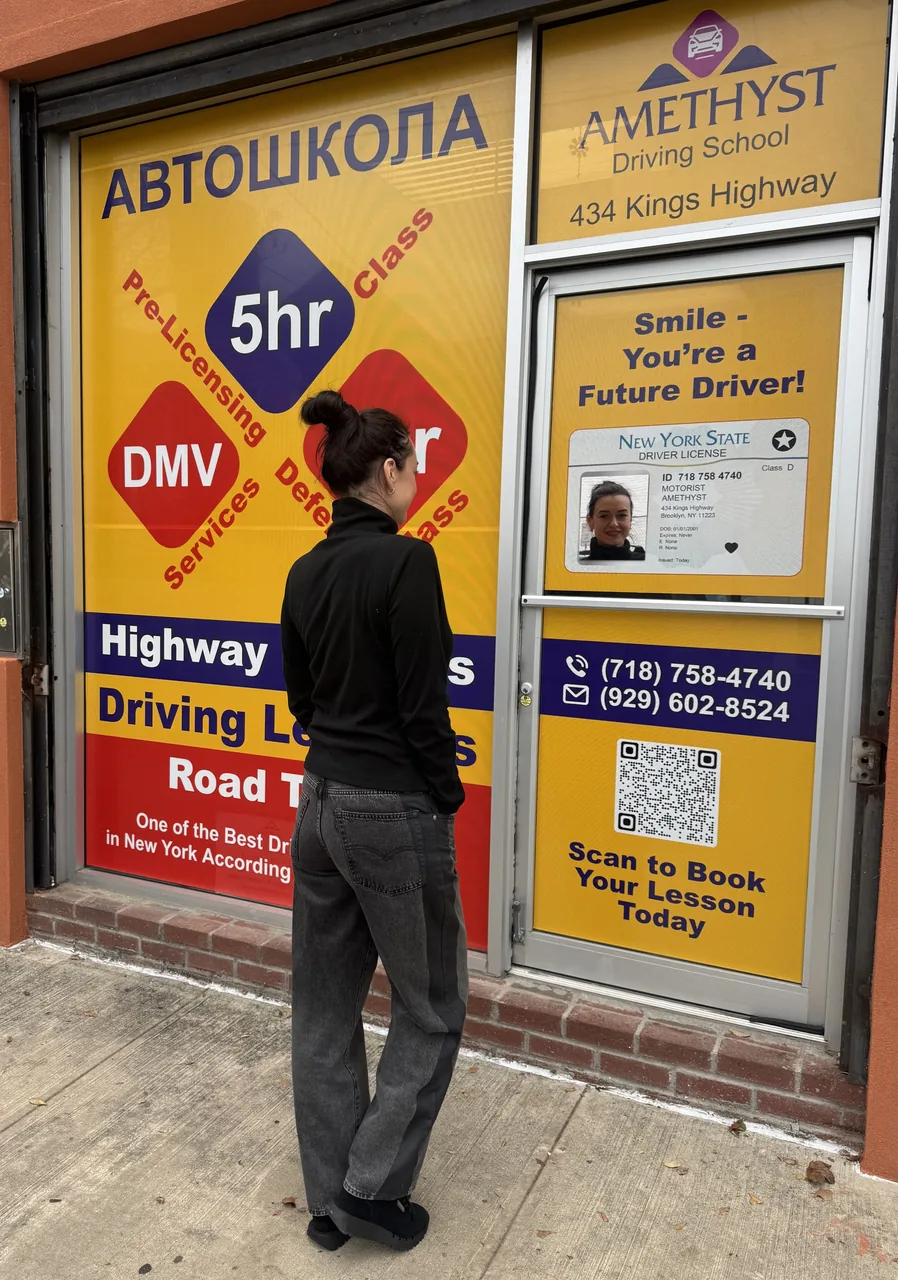
We pride our business on its professionalism, punctuality, affordability, and up to date teaching techniques and learning strategies. Our mission is to provide our students with a higher standard of driving techniques to help them become safe, confident drivers.
We are looking forward in sharing our best with you!
Safety Tips That Make You a Far Better Driver (NYC Guide 2026)
Safe driving is not about luck. It’s about awareness, consistency, and smart habits.
Most accidents in NYC don’t happen because drivers “don’t know how to drive” — they happen because people stop paying attention for just a few seconds.
If you apply the safety principles below daily, you won’t just become a safer driver — you will become a calmer, more confident, and more skilled one.
1. Always Scan 12–15 Seconds Ahead
Most beginners only look at the car directly in front of them. Professional drivers scan much farther ahead.
Look through traffic, not at traffic
Anticipate red lights before they change
Notice brake lights early
Watch pedestrian movement at corners
Why it matters: The earlier you see a problem, the smoother your reaction will be.
2. Keep a Real Following Distance
NYC traffic makes people drive too close. This creates panic braking and rear-end collisions.
Use the 3-second rule minimum — and increase it in rain or heavy traffic.
Safe distance = more time to think + less stress.
3. Master Smooth Braking
A safe driver does not brake at the last second.
Release gas early
Coast into red lights
Brake gradually
Avoid hard stops unless necessary
Smooth braking shows control — and reduces risk dramatically.
4. Use Mirrors Every 5–8 Seconds
Your mirrors are your defensive driving tools.
Check rearview often
Scan side mirrors before slowing
Always mirror before signaling
Mirror before braking hard
Good drivers know what’s happening behind them — not just in front.
5. Eliminate Distractions Completely
Phones, adjusting music, even intense conversations reduce reaction time.
In NYC, one second of distraction can mean:
A pedestrian stepping into the street
A sudden double-parked vehicle
A cyclist passing from the right
Rule: When the car moves, your focus stays on the road.
6. Control Your Speed — Not Just the Limit
Driving the speed limit does not automatically mean driving safely.
Adjust speed for:
School zones
Narrow Brooklyn streets
Heavy pedestrian areas
Rain or snow
Safe speed is situational awareness in action.
7. Signal Early and Clearly
Late signals cause confusion and aggressive reactions from other drivers.
Signal 3–5 seconds before turning
Signal before changing lanes
Cancel signal immediately after completing maneuver
Clear signals reduce conflict on the road.
8. Stay Calm Under Pressure
NYC drivers can be impatient. But defensive driving means staying emotionally neutral.
Do not react to:
Honking
Aggressive lane changes
Tailgaters
Calm drivers make better decisions.
9. Practice Situational Awareness
Always ask yourself:
Where could danger come from?
Who might enter my lane?
What if the light changes right now?
Thinking ahead prevents sudden reactions.
10. Drive Predictably
The safest drivers are predictable drivers.
Maintain steady lane position
Avoid sudden movements
Keep consistent speed
Communicate intentions clearly
When others understand what you’re doing, accidents decrease.
Final Thoughts
Becoming a better driver is not about driving faster or “more confidently.”
It’s about building disciplined habits that work every single day.
Apply these safety tips consistently and you’ll notice:
Lower stress levels
Better road awareness
Fewer mistakes
Greater confidence behind the wheel
Safe driving is a skill — and skills improve with structured practice.
Need professional driving lessons in NYC?
We focus on real-world safety training, defensive driving, and confidence-building practice sessions.
Used to monitor number of Google Analytics server requests
10 minutes
__utmb
Used to distinguish new sessions and visits. This cookie is set when the GA.js javascript library is loaded and there is no existing __utmb cookie. The cookie is updated every time data is sent to the Google Analytics server.
30 minutes after last activity
__utmc
Used only with old Urchin versions of Google Analytics and not with GA.js. Was used to distinguish between new sessions and visits at the end of a session.
End of session (browser)
__utmz
Contains information about the traffic source or campaign that directed user to the website. The cookie is set when the GA.js javascript is loaded and updated when data is sent to the Google Anaytics server
6 months after last activity
__utmv
Contains custom information set by the web developer via the _setCustomVar method in Google Analytics. This cookie is updated every time new data is sent to the Google Analytics server.
2 years after last activity
__utmx
Used to determine whether a user is included in an A / B or Multivariate test.
18 months
_ga
ID used to identify users
2 years
_gali
Used by Google Analytics to determine which links on a page are being clicked
30 seconds
_ga_
ID used to identify users
2 years
_gid
ID used to identify users for 24 hours after last activity
24 hours
_gat
Used to monitor number of Google Analytics server requests when using Google Tag Manager
1 minute
_gac_
Contains information related to marketing campaigns of the user. These are shared with Google AdWords / Google Ads when the Google Ads and Google Analytics accounts are linked together.
90 days
Marketing cookies are used to follow visitors to websites. The intention is to show ads that are relevant and engaging to the individual user.
Google Maps is a web mapping service providing satellite imagery, real-time navigation, and location-based information.